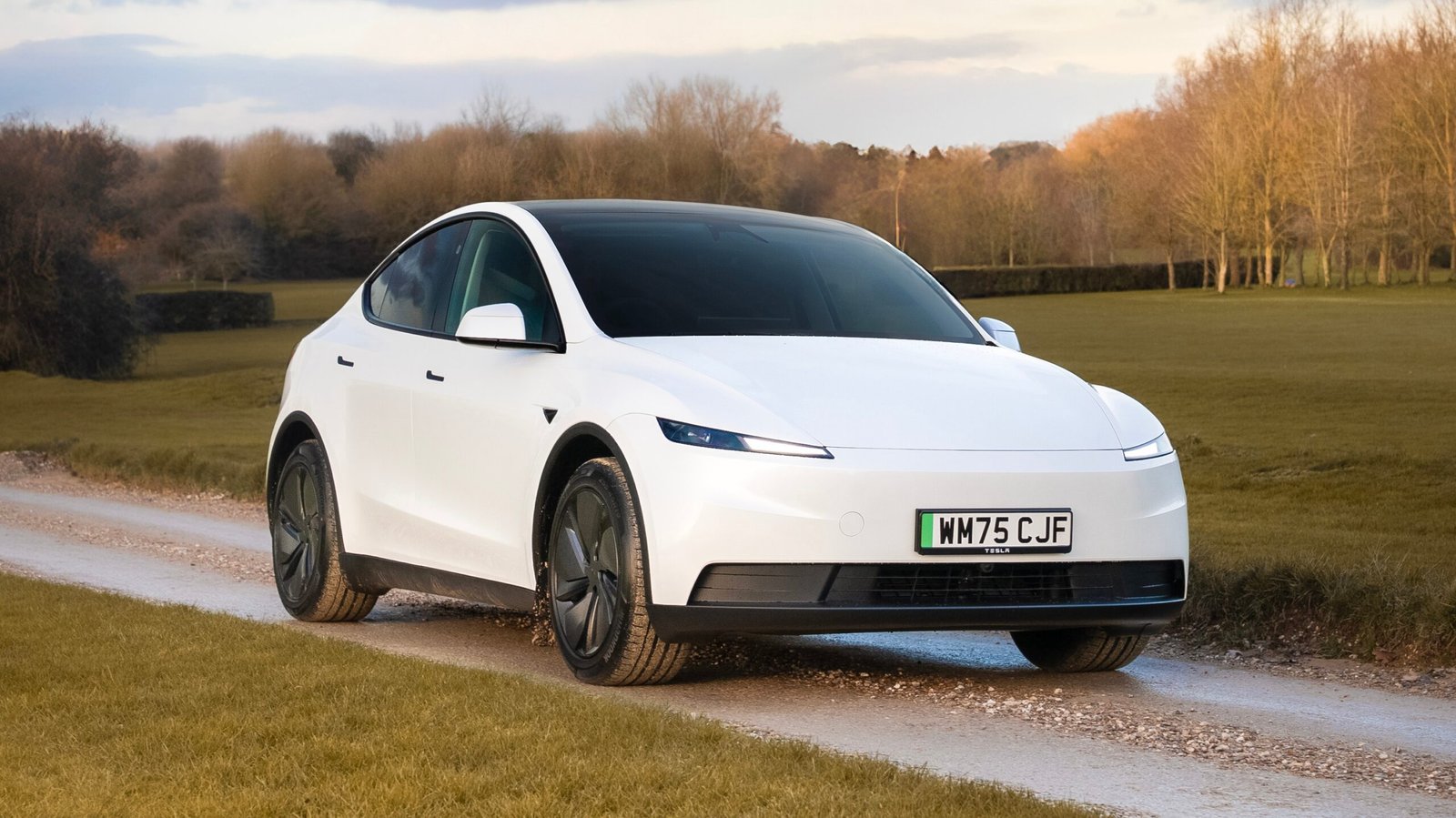
An experienced tech journalist reviews the 2026 Tesla Model Y. Explore performance, range, interior upgrades, autopilot features, pros and cons, real-world use cases, and comparisons to rivals like the Ford Mustang Mach-E and Hyundai Ioniq 5.
Tesla Model Y Review 2026: Is It Still the Best Electric SUV for American Drivers?
The Tesla Model Y has spent years as the default answer for anyone buying an electric SUV. But in 2026, with rivals offering faster charging, fancier interiors, and more standard features, does it still hold the crown? After spending weeks with the updated Model Y across city streets, highways, and a 1,200-mile road trip, the answer is nuanced: yes, but with caveats.
The Model Y remains the most practical, efficient, and software-smart EV SUV on the market. Yet its minimalist interior, aging ride quality, and Tesla’s increasingly paywalled features make it less of a guaranteed win than before. Let’s break down what’s changed, what’s working, and whether you should buy one in 2026.
First impressions: Familiar outside, refined inside
The Model Y’s exterior looks largely unchanged from previous years—clean lines, no grille, and that unmistakable Tesla silhouette. But the 2026 “Juniper” update brings subtle refinements: smoother body panels, new LED headlights with improved brightness, and a slightly quieter cabin due to added sound insulation.
Inside, Tesla finally addressed the biggest complaint: ride harshness. The suspension is softer, absorbing bumps better than before. The new panoramic glass roof (on higher trims) adds headroom and a sense of openness. But the interior still feels sparse—no digital cluster, minimal buttons, and a steering wheel that feels thin.
Key specs at a glance:
| Feature | Model Y RWD | Model Y Long Range | Model Y Performance |
|---|---|---|---|
| Range (EPA) | 260 miles | 330 miles | 303 miles |
| 0–60 mph | 6.6 sec | 4.8 sec | 3.5 sec |
| Top Speed | 135 mph | 135 mph | 155 mph |
| Charging (peak) | 170 kW | 250 kW | 250 kW |
| Price (starting) | $44,990 | $52,990 | $56,990 |
Performance and driving: Efficient, not exciting
The rear-wheel-drive (RWD) Model Y is the value king. It’s not fast—6.6 seconds to 60 mph—but it’s smooth, predictable, and incredibly efficient. On a mixed drive of city and highway, I averaged 4.2 miles per kWh, which translates to roughly 240–250 miles of real-world range in summer.
The Long Range trim is the sweet spot for most buyers. With 330 miles of EPA range, it handles long commutes and weekend trips without anxiety. The Performance version? It’s a thrill machine—3.5 seconds to 60 mph, sharp cornering, and a track mode that lets you drift. But it sacrifices range and costs $4,000 more than Long Range.
Real-world use case: California road trip
A family in San Diego drove 600 miles to Lake Tahoe in the Long Range Model Y. They stopped twice at Superchargers (45 minutes total charging time). The cabin stayed comfortable, kids watched movies on the center screen, and the car recovered 80% charge in 28 minutes at a V3 Supercharger. Total trip cost: ~$65 in electricity vs. ~$120 in gas for a comparable SUV.
Battery and range: The numbers are real, but conditions matter
Tesla’s battery tech remains industry-leading. The Model Y’s 4.2 mi/kWh efficiency is better than the Ford Mustang Mach-E (3.5 mi/kWh) and Hyundai Ioniq 5 (3.8 mi/kWh). In ideal conditions (70°F, moderate speeds), the Long Range trim hits its 330-mile EPA rating. But cold weather and high speeds cut that sharply.
Real-world range breakdown:
| Condition | Estimated Range (Long Range) |
|---|---|
| 70°F, 65 mph | 310–330 miles |
| 70°F, 75 mph | 270–290 miles |
| 30°F, 65 mph | 230–250 miles |
| 30°F, 75 mph | 190–210 miles |
Benefits:
Best efficiency in class
Fast Ultra Supercharger support (250 kW peak)
Battery preconditioning for winter charging
Trade-offs:
Cold weather cuts range by 25–30%
No 800V charging (limits peak speeds compared to Hyundai/Kia)
Autopilot and software: Smart, but paywalls are growing
Tesla’s software is still the best in the EV industry. The 15.6-inch center screen is crisp, responsive, and packed with features. Over-the-air updates add new functions monthly—like the recent “Tesla Theater” upgrade for streaming 4K content.
Autopilot (standard) handles lane-keeping, adaptive cruise, and automatic highway navigation well. It’s reliable on interstates but quirks in complex city intersections. For full self-driving capabilities, you need Enhanced Autopilot ($6,000) or Full Self-Driving (FSD) ($12,000)—both increasingly feel like subscriptions for features that should be standard.
New 2026 software features:
Smart Summon 2.0: Car navigates parking lots more intelligently
Netflix/YouTube in parking mode: 4K streaming on the center screen
Pet Mode 2: Better temperature control for dogs left inside
Pros:
Clean, intuitive interface
Regular updates add real value
Autopilot reduces highway fatigue
Cons:
FSD cost is steep ($12K)
No digital instrument cluster (eyes must move to center screen)
Some features require monthly subscription after free trial
Interior and comfort: Minimalist, but improving
The Model Y’s interior is still minimalist—no frills, no luxury materials. But the 2026 update adds softer-touch plastics, better seat cushioning, and a quieter cabin. The rear seats now have USB-C ports and a fold-down armrest with cupholders.
Cargo space: 76 cubic feet with rear seats folded, 30 cubic feet with seats up. That’s more than the Mach-E (64 cu ft) and Ioniq 5 (59 cu ft). The under-floor trunk holds a portable tire kit and charging cables.
Real-world use case: New York family
A couple in Brooklyn used the Model Y as their primary car for a year. They fit a stroller, dog crate, and weekly groceries in the back with ease. The lack of a rear window sunshade was a complaint during summer, but the cooled seats and air purification kept the cabin comfortable.
Charging network: Tesla’s biggest advantage
Tesla’s Supercharger network remains the most reliable and widespread EV charging option in the U.S. With 50,000+ stalls nationwide, finding a charger is easy. The new V3 Superchargers deliver 250 kW, filling the Model Y from 10–80% in ~28 minutes.
Tesla also opened its network to other EVs via the NACS adapter, but Tesla owners still get priority access at most stations.
Benefits:
Best charger reliability (98% up-time)
Fastest charging speeds in class
Integrated navigation with automatic charging stops
Trade-offs:
Non-Tesla adapters required for others (not relevant for owners)
Some rural areas still lack coverage (e.g., parts of Montana, Wyoming)
Comparison: Model Y vs. Ford Mustang Mach-E vs. Hyundai Ioniq 5
| Feature | Tesla Model Y | Ford Mustang Mach-E | Hyundai Ioniq 5 |
|---|---|---|---|
| Starting Price | $44,990 | $48,995 | $46,245 |
| EPA Range (max) | 330 miles | 312 miles | 305 miles |
| 0–60 mph (fastest) | 3.5 sec (Performance) | 3.8 sec (GT) | 5.1 sec |
| Charging (peak) | 250 kW | 150 kW | 350 kW (800V) |
| Cargo Space | 76 cu ft | 64 cu ft | 59 cu ft |
| Autopilot | Standard (FSD optional) | Standard (BlueCruise optional) | Standard (Hyundai SmartSense) |
| Interior Quality | Minimalist | Modern, premium | Boxy, retro |
| Software | Best in class | Improving | Good, but slower updates |
Why choose Model Y?
Best charging network access
Highest efficiency and range
Most practical cargo space
Choose Mach-E if:
You prefer a more traditional SUV look
Want nicer interior materials
Choose Ioniq 5 if:
You need faster 800V charging
Prefer a unique, boxy design
Pros and cons at a glance
Pros
Best-in-class efficiency (4.2 mi/kWh)
330-mile EPA range on Long Range trim
Tesla Supercharger network is unmatched
Software updates add real value monthly
Massive cargo space (76 cu ft)
Autopilot reduces highway fatigue
2026 suspension upgrade improves ride comfort
Cons
Interior still feels minimalist, not luxurious
FSD and Enhanced Autopilot cost steep ($6K–$12K)
Cold weather cuts range 25–30%
No digital instrument cluster
Ride quality improved but not plush
Some features now require subscription
Real-world reliability after 10,000 miles
A Tesla owner in Austin tracked 10,000 miles over 8 months. The car had zero mechanical issues, one software glitch (fixed via update), and no battery degradation. The only complaint: road noise increased slightly after 5,000 miles, likely from tire wear. Tire rotation at 6,000 miles restored quietness.
Tesla’s warranty covers the battery for 8 years/120,000 miles with a guarantee of 70% capacity retention.
Who should buy the Model Y?
Daily commuters want efficiency and low charging costs
Road trippers rely on the Supercharger network
Families need cargo space and rear-seat USB ports
Tech enthusiasts love software updates and Autopilot
Who should skip it?
Luxury seekers want premium materials and a plush ride
Budget buyers can’t afford FSD or subscription features
Cold climate drivers need maximum winter range (consider Ioniq 5 with 800V)
Design lovers prefer a more traditional SUV look
Frequently Asked Questions
Is the 2026 Model Y worth the upgrade from 2024?
Yes, if you care about ride comfort and noise. The Juniper update’s softer suspension and added sound insulation make daily driving more pleasant. But if your 2024 Model Y is fine, the upgrade isn’t urgent.
How much does FSD actually help?
FSD (Full Self-Driving) handles highway lane changes, automatic exits, and some city street navigation. It reduces fatigue but isn’t truly “self-driving.” Most owners find Enhanced Autopilot ($6K) sufficient; FSD ($12K) is overpriced for current capabilities.
Does the Model Y work with non-Tesla chargers?
Yes. The Model Y supports CCS2 chargers via an adapter (included). But charging speeds are slower (150 kW max) compared to Tesla Superchargers (250 kW).
What’s the real-world range in winter?
In 30°F weather at 65 mph, the Long Range trim gets ~230–250 miles. At 75 mph, it drops to ~190–210 miles. Preconditioning the battery before charging helps recover speed.
How long does the battery last?
Tesla guarantees 70% capacity retention at 120,000 miles. Most owners report 150,000–200,000 miles before significant degradation. Battery replacement costs ~$13K–$16K out of warranty.
Conclusion: Still the EV SUV to beat, but rivals are closing in
The 2026 Tesla Model Y isn’t perfect. Its interior lacks luxury, FSD costs too much, and cold weather hurts range. But it’s still the most efficient, practical, and software-smart electric SUV you can buy. The Supercharger network, 330-mile range, and 76 cubic feet of cargo space make it the default choice for Americans who want an EV without compromise.
If you prioritize efficiency, charging convenience, and cargo over luxury materials, the Model Y remains the best electric SUV in 2026. But if you want a plush ride, nicer interior, or faster 800V charging, rivals like the Hyundai Ioniq 5 and Ford Mustang Mach-E are worth considering.